If you own an outdoor fibreglass pool, sunlight is both a benefit and a challenge. While sunshine makes swimming more enjoyable, it can also significantly reduce the effectiveness of chlorine in your pool water. Without proper management, this can lead to cloudy water, algae growth and unsafe swimming conditions. In this article, we explain how sunlight and heat affect chlorine levels, why stabilisers are essential, and how to maintain clean and safe water in your fibreglass pool, particularly during the hot Perth summer.
Searching For Your Dream Pool?
- Last Modified 30 April 2026
Understanding Chlorine in Your Swimming Pool
Swimming pools create an ideal environment for bacteria and algae due to warm water, moisture, and frequent use. Chlorine is essential for keeping pool water clean and safe, as it kills harmful microorganisms before they multiply. Without proper levels, pools can quickly become green, cloudy, and unhygienic.
Chlorine works by breaking down the cell membranes of bacteria and algae, effectively disinfecting the water. When balanced correctly, it protects swimmers without causing irritation. Too much chlorine can cause eye and skin discomfort, while too little allows harmful organisms to thrive. Understanding how chlorine interacts with environmental factors like sunlight and heat is key to maintaining healthy water throughout the swimming season.
For practical tips on keeping chlorine levels safe and consistent, read our guide on how to manage chlorine levels in your pool.
Types of Chlorine
There are two main types of chlorine present in pool water:
- Free chlorine is the active chlorine available to sanitise the pool.
- Combined chlorine is chlorine that has already reacted with contaminants and is no longer effective.
For safe swimming, free chlorine levels should be maintained between 1 and 3 parts per million.
How Sunlight and Heat Affect Chlorine Levels
Sunlight contains ultraviolet radiation that rapidly degrades free chlorine. When ultraviolet rays hit the water, chlorine breaks down at a molecular level and escapes into the atmosphere as a gas.
High temperatures further increase chlorine loss. When water temperatures rise above 27 to 28 degrees Celsius, chlorine becomes less stable and is consumed more quickly. Warm water also encourages faster bacterial growth, which increases chlorine demand. As a general guideline, chlorine input may need to be doubled for every 6-degree increase above 27 degrees Celsius to maintain safe levels.
In Perth summer conditions, an unprotected outdoor pool can lose significant amounts of chlorine within just a few hours, making regular testing and adjustment essential.
Ideal Pool Chemical Levels
Maintaining the right chemical levels is essential for safe and comfortable swimming. For outdoor fibreglass pools, aim for the following:
- Free chlorine: 1 to 3 parts per million
- Cyanuric acid (stabiliser): 30 to 50 parts per million
- pH levels: 7.2 to 7.6
- Water temperature: ideally below 28 degrees Celsius
See Our Most Popular Award Winning Pools
Searching For Your Dream Pool?
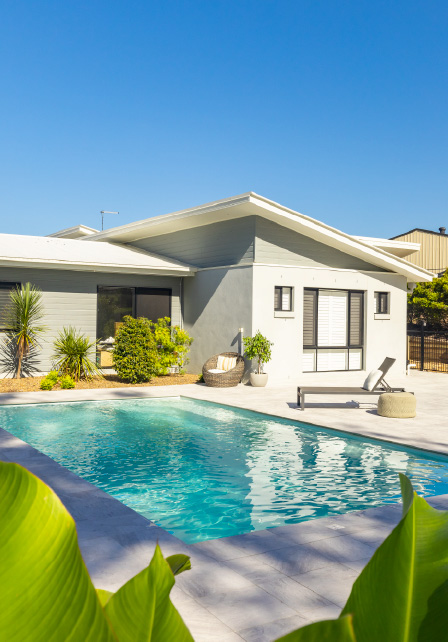
How Pool Stabilisers Protect Chlorine
Pool stabilisers, most commonly cyanuric acid, act like sunscreen for your pool. They protect chlorine from ultraviolet degradation, allowing it to remain effective for longer periods.
Some chlorine products, such as trichlor and dichlor tablets, already contain stabiliser, while others require it to be added separately. Saltwater pools also rely on chlorine, and sunlight affects them in the same way as traditional chlorine pools. When stabiliser levels are correct, chlorine can be up to eight times more effective.
Common Signs Your Pool Is Losing Chlorine Too Fast
Rapid chlorine loss can make your pool unsafe and affect water quality. Watch out for these common signs that indicate chlorine is breaking down faster than it should:
- Strong chlorine smell
- Cloudy or dull water
- Algae appearing shortly after cleaning
- Skin or eye irritation
- Chlorine levels dropping within hours of dosing
Noticing any of these signs means your pool may need additional testing, stabilisers, or adjustments to chlorine levels.
How to Reduce Chlorine Loss Naturally
Reducing chlorine loss is essential for keeping your pool water safe and balanced, especially during hot and sunny weather. There are several simple measures you can take to protect your chlorine levels:
- Use a pool cover when the pool is not in use to shield chlorine from sunlight
- Avoid swimming during peak ultraviolet hours
- Remove leaves and debris from the pool regularly
- Maintain correct stabiliser (cyanuric acid) levels
- Ensure proper filtration and water circulation
Implementing these steps will help maintain stable chlorine levels and improve overall water quality.
How Much Cyanuric Acid Does Your Pool Need
For outdoor pools, a minimum of 30 parts per million of cyanuric acid is required to protect chlorine from sunlight. Ideally, levels should be maintained between 40 and 50 parts per million to ensure consistent sanitising performance.
Because testing results can vary, monthly testing during the swimming season is recommended to ensure stabiliser levels remain effective. It is also important to avoid adding too much cyanuric acid. Excessive levels can reduce chlorine effectiveness, a condition often referred to as cyanuric creep.
As cyanuric acid builds up, it can also lower pH levels, making the water more acidic. This may require balancing with sodium carbonate or sodium bicarbonate. Pools that use stabilised chlorine tablets often require closer monitoring to prevent stabiliser levels from rising too high.
How to Check Your Pool’s Free Chlorine Levels
Maintaining the correct free chlorine levels is important for keeping your pool safe and clean. Homeowners can use an at-home test kit to monitor chlorine between professional checks. Simply collect a water sample, add the reagent according to the kit instructions, and compare the resulting colour to the chart provided.
For optimal results, it’s recommended to have your pool water professionally tested at your local pool shop at least once a month. Regular home testing in between these visits can help you keep track of chlorine levels and ensure your pool remains balanced.
Keep Your Pool Safe All Summer Long
Sunlight, heat and bacteria all affect chlorine levels in your pool. Regular testing, correct stabiliser use and professional maintenance are essential to keeping your fibreglass pool clean and safe.
The team at Barrier Reef Pools Perth is always happy to help with pool water testing, maintenance advice or fibreglass pool installation, so you can enjoy your pool with confidence all summer long.
Ready to get started? Contact Barrier Reef Pools Perth today to find an expert pool builder and keep your pool in top condition.
Frequently Asked Questions
How often should I add chlorine in summer?
In Perth summers, it depends on pool usage, temperature and sunlight exposure. Check chlorine levels at least once a day during hot weather to ensure they stay between 1 and 3 parts per million.
Can too much sunlight make my pool unsafe?
Yes. Sunlight breaks down free chlorine, reducing its ability to kill bacteria and algae. Using stabilisers and regular testing helps protect your pool water.
Do indoor pools need a stabiliser?
No. Stabiliser is only needed for outdoor pools exposed to sunlight. Indoor pools maintain stable chlorine levels without it.
Is cyanuric acid bad for pools?
No, if levels are correct. It protects chlorine from sunlight, but too much can reduce chlorine efficiency. Regular testing keeps it within a safe range.
Should I test my pool myself or use a professional?
Home testing is useful, but professional testing is not only more accurate, it is a requirement for warranty purposes to take a sample to your local pool shop every month. Home tests in between pool shop visits are useful to ensure your pool water remains safe and chemically balanced.